1

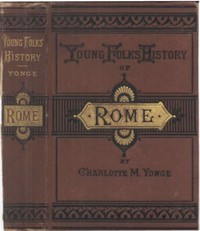
Young Folks' History of Rome — Key Ideas to Explore
(0 User reviews)
73
Project Gutenberg
2005
Not confirmed
Rome -- History -- Juvenile literature
Readers of public-domain and historical texts
Project Gutenberg digital edition
en
Edition facts
Words
66,460
Reading time
289 min
Text sections
10
Young Folks' History of Rome — Key Ideas to Explore can be approached with a clearer sense of reading commitment from its source measurements: 66,460 words, 4 hr 49 min estimated reading time, and 10 detected text sections.
The text analysis averages about 30.1 words per sentence, while the detected sections provide another way to judge how the source is divided.
Project Gutenberg metadata also associates the work with “Rome -- History -- Juvenile literature,” connecting these edition facts with the source record’s subject description.
Source:
Project Gutenberg record #16667
Charlotte M. Yonge's narrative history for young readers traces Rome from legendary founding to the early medieval period, using vivid anecdotes and moral commentary to frame key events and figures.
Read the complete public-domain text at its original source.
Read on Project GutenbergCharlotte M. Yonge opens her Young Folks' History of Rome with a preface stating her aim to give the history 'as briefly as could be done consistently with such details as can alone make it interesting to all classes of readers.' The table of contents reveals a sweep from Italy's geography and the wanderings of Aeneas through the reign of Pope Gregory the Great, ending with the year 800. The early chapters rely on legendary material—Romulus, Numa, the Tarquins—but the narrative quickly moves into the Republic, with episodes such as Menenius Agrippa's fable and the Decemvirs. Yonge's voice is direct and morally engaged, often pausing to comment on character or consequence, as when she notes that Sulla 'did not see that the rule which had worked tolerably well while Rome was only a little city... would not serve when it was the head of numerous distant countries.'
From Legend to Republic
The first ten chapters move swiftly from myth to the early Republic. Yonge presents the founding as a story, not a debate: Romulus and Remus, the Sabine women, Numa's religious reforms. She does not question the historicity of these tales but uses them to establish Roman character—piety, martial valor, and a tendency toward internal conflict. The expulsion of the Tarquins and the war with Porsena are treated as turning points, after which she inserts a chapter on 'The Roman Government' that explains the structure of consuls, Senate, and assemblies. This pattern—narrative episode followed by explanatory pause—recurs throughout. The fable of Menenius Agrippa (the belly and the limbs) is given as a key moment in plebeian-patrician relations, and the story of Coriolanus illustrates the dangers of aristocratic pride. Yonge's language is plain but not simplistic: she uses terms like 'patrician,' 'plebeian,' and 'tribune' without over-explaining, trusting her young audience to follow.
Punic Wars and Eastern Conquests
Chapters 17 through 21 cover the First and Second Punic Wars, the conquest of Cisalpine Gaul, and the early Eastern wars. Yonge gives Hannibal considerable space, including his vow, his crossing of the Alps, and his meeting with Scipio at Zama. She does not shy from brutality: the destruction of Carthage and Corinth are described as deliberate Roman policy. The narrative is driven by personalities—Hannibal, Scipio, Cato the Elder—but Yonge also notes structural changes, such as the growth of provincial governance and the influx of wealth. She writes that after the fall of Carthage, 'the Romans had no longer any rival to fear,' but immediately flags the moral cost: luxury, corruption, and the decline of the old virtues. This section shows Yonge at her most engaged, balancing admiration for Roman achievement with a clear-eyed view of its costs. The excerpts include a vivid description of gladiatorial shows at a banquet, which she uses to illustrate Roman cruelty.
Civil Wars and the End of the Republic
The chapters on the Gracchi, Marius, Sulla, Pompey, and Caesar form the dramatic core of the book. Yonge presents the Gracchi as well-meaning reformers undone by factional violence. Marius and Sulla are contrasted: Marius as a rough soldier, Sulla as a calculating aristocrat. The excerpt on Sulla's proscription is particularly detailed, noting how he 'caused himself to be named Dictator' and attempted to restore the old government. Yonge observes that Sulla 'did not see' the inadequacy of old institutions for a far-flung empire—a rare moment of explicit authorial judgment. The rise of Julius Caesar is handled briskly, with the crossing of the Rubicon and the assassination. Yonge's treatment of Caesar is ambivalent: she acknowledges his talents but emphasizes his ambition. The section ends with the Second Triumvirate and the rise of Augustus, whom she treats as a necessary evil who brought peace at the cost of liberty.
Empire and Decline
The final chapters cover the Roman Empire from Augustus through the reign of Pope Gregory the Great. Yonge's pace accelerates: Tiberius, Caligula, Claudius, and Nero are dispatched in a single chapter, with emphasis on their vices. The Flavian family, the Antonines, and the Severan dynasty receive similar treatment. She notes the increasing role of the Praetorian Guard in making and unmaking emperors. The division of the empire under Diocletian, the rise of Constantine, and the spread of Christianity are covered, though Yonge's focus remains political and military. The last chapters deal with the barbarian invasions—Alaric the Goth, the Vandals, Attila the Hun, Theodoric the Ostrogoth—and the Byzantine reconquest under Belisarius. The book concludes with Pope Gregory the Great, whom Yonge presents as a figure bridging the ancient and medieval worlds. The final date, 800, marks the coronation of Charlemagne, but the text ends before that event, leaving the reader at the threshold of the Middle Ages.
Yonge's Young Folks' History of Rome is best read as a continuous narrative rather than a reference work. The table of contents serves as a useful map, but the chapters are short and often end on a cliffhanger or moral reflection. Readers unfamiliar with Roman history may benefit from keeping a timeline at hand, as Yonge moves quickly and does not always restate dates. Her judgments are clear but not dogmatic; she expects her reader to think about why Rome rose and fell. The book rewards those who read it straight through, following the arc from shepherds to emperors to saints.
I remember rereading this as a child, the moral weight of each Roman collapse pressing gently on my heart. It stirred a similar quiet awe to when I first traced Augustus’s own voice in Monumentum Ancyranum: The Deeds of Augustus — Reading Notes, that strange feeling of empire as a deeply personal, almost lonely, endeavor.
There are no reviews for this eBook.
There are no comments for this eBook.
Reader reflection
How did this book work for you?
Your answers remain private and are stored only in this browser.
Your progress
0
/
10
2
How did the book work for you overall?
3
How likely are you to recommend this book?
4
How much effort did this book require?
5
Did you relate to its people, ideas, or situations?
6
How useful were the ideas in this book?
7
How distinctive were its ideas or approach?
8
How clear did the writing feel?
9
What changed or sharpened your thinking?
10