1

History of the Decline and Fall of the Roman Empire — Volume 3 — Key Ideas to Explore
(0 User reviews)
1993
Project Gutenberg
2008
Not confirmed
Rome -- History -- Empire, 30 B.C.-476 A.D.; Byzantine Empire -- History -- To 527
Readers of public-domain and historical texts
Project Gutenberg digital edition
en
Edition facts
Words
172,074
Reading time
749 min
Text sections
18
The source record for History of the Decline and Fall of the Roman Empire — Volume 3 — Key Ideas to Explore measures this digital text at 172,074 words, 12 hr 29 min estimated reading time, and 18 detected text sections.
The text analysis averages about 36.9 words per sentence, while the detected sections provide another way to judge how the source is divided.
Project Gutenberg metadata also associates the work with “Rome -- History -- Empire, 30 B.C.-476 A.D.,” connecting these edition facts with the source record’s subject description.
Source:
Project Gutenberg record #892
Gibbon's third volume traces the late Roman Empire from Theodosius I through the fall of the West, with sharp contrasts between imperial piety and political violence, court intrigue and barbarian invasions.
Read the complete public-domain text at its original source.
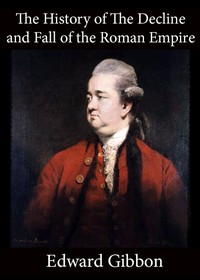
Read on Project GutenbergGibbon opens Volume 3 with the reign of Theodosius, a ruler whose penance for a massacre and defense of orthodoxy set a pattern for the volume: the entanglement of Christian piety with imperial violence. The narrative moves from the destruction of paganism to the division of the empire between Theodosius’s sons, then to the Gothic revolts and the sack of Rome by Alaric. Throughout, Gibbon juxtaposes the ceremonial grandeur of the court—gold thrones, eloquent orations, and pilgrimages—with the brutal realities of civil war, assassination, and barbarian occupation.
The excerpts reveal a historian attentive to the ironies of power: the same emperor who enforces Christian humility also commissions statues and donatives; the empress Eudocia, on a pious pilgrimage, travels with “a throne of gold and gems.” Gibbon’s voice is coolly analytical, often undercutting the official narratives of his sources.
Piety and Ostentation in the Eastern Court
The account of the empress Eudocia’s pilgrimage to Jerusalem illustrates a recurring tension in this volume: the display of Christian devotion through conspicuously imperial wealth. Gibbon notes that her “ostentatious progress through the East may seem inconsistent with the spirit of Christian humility.” She addresses the senate of Antioch from a golden throne, donates two hundred pounds of gold for baths, and accepts statues decreed in her honor—gestures that mimic the civic euergetism of pagan emperors. Yet her pilgrimage also yields relics: the chains of St. Peter, the right arm of St. Stephen, and a picture of the Virgin attributed to St. Luke. Gibbon presents these acquisitions without overt commentary, but the juxtaposition of “alms and pious foundations” with the collection of physical objects suggests a material dimension to late antique holiness.
The Fragility of Imperial Favor
Eudocia’s story also exemplifies the precariousness of life at court. After her pilgrimage, Gibbon writes, “the palace was distracted by female discord” between the empress and her sister-in-law Pulcheria. The execution of Paulinus, master of the offices, and the disgrace of the praetorian prefect Cyrus show that imperial favor could not protect even the highest officials. Gibbon reports the “secret rumor” that Paulinus’s guilt was that of a successful lover, but he leaves the truth ambiguous. Later, Eudocia retaliates against a count by having him assassinated, and she is stripped of her rank. Gibbon’s phrasing—“disgraced, perhaps unjustly, in the eyes of the world”—keeps the reader aware that the historical record may be shaped by court propaganda. The episode ends with Eudocia’s deathbed protestation of innocence, a detail that underscores the gap between public narrative and private reality.
War and Religion on the Eastern Frontier
A brief Persian war, triggered by a bishop’s destruction of a fire-temple, reveals how religious zeal could ignite international conflict. Gibbon notes that the bishop “aspired to the crown of martyrdom,” and his act provoked a persecution of Christians by the Magi. The war itself is described as a “slight alarm” that scarcely interrupted the tranquility of the East, but the episode highlights a pattern: the empire’s internal religious disputes often had external repercussions. Gibbon’s treatment is characteristically ironic—the bishop’s martyrdom is both a pious act and a provocation, and the war is both just and avoidable. The passage also introduces the theme of succession, as the Persian king Jezdegerd, once the “supposed guardian” of the young Theodosius, is succeeded by his son Bahram, who continues the persecution. This dynastic continuity contrasts with the instability of the Roman imperial office in the same period.
The Gothic Threat and the Fall of Rome
The volume’s later chapters shift focus to the West, where the Gothic leader Alaric besieges Rome three times before finally sacking it in 410. Gibbon’s narrative emphasizes the contrast between the decadence of the Roman senate and the vigor of the barbarians. The excerpts do not include the full account, but the chapter titles indicate a detailed treatment of Alaric’s invasions, the occupation of Gaul and Spain, and the independence of Britain. Gibbon’s method is to trace the gradual disintegration of imperial authority through a series of usurpations, assassinations, and barbarian settlements. The death of Stilicho, the general who had repelled both Alaric and Radagaisus, marks a turning point: after his execution, the western empire loses its last effective defender. Gibbon’s prose here is at its most dramatic, but always anchored in the specific actions of individuals and armies.
Readers approaching this volume should attend to Gibbon’s use of irony and his careful weighing of sources. He often presents multiple versions of events—such as the rumors about Paulinus or the justification for the Persian war—without settling on a single interpretation. The footnotes by the Rev. H. H. Milman, added in the 1845 edition, provide a useful counterpoint, sometimes correcting or expanding Gibbon’s references. For those interested in the intersection of religion and politics, the chapters on the destruction of paganism and the introduction of saint worship offer particularly rich material. The volume is best read as a series of interconnected narratives rather than a continuous argument, with each chapter building toward the final extinction of the western empire.
There’s a particular ache in reading how Theodosius’s piety and the court’s violence somehow coexisted, how order frayed at the edges. That same unease lingers with Tiberius, whose quiet tyranny feels less like history and more like a haunting memory. I find myself returning to Tiberius the Tyrant — Reading Companion whenever I need to sit with that discomfort a while longer.
There are no reviews for this eBook.
There are no comments for this eBook.
Reader reflection
Your personal reading reflection
Build a private reading journal entry for this title.
Your progress
0
/
10
2
Was reading this book enjoyable?
3
Would you pass this book on to a friend?
4
How easy was the book to follow?
5
Did any part of the book feel personally relevant?
6
What did you appreciate most?
7
How did the reading compare with what you expected?
8
How would you describe its reading pace?
9
What is the main idea you are taking away?
10