1

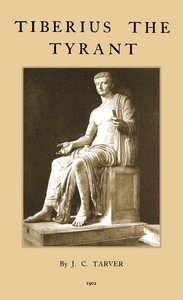
Tiberius the Tyrant — Reading Companion
(0 User reviews)
136
Project Gutenberg
2021
Not confirmed
Rome -- History -- Tiberius, 14-37; Tiberius, Emperor of Rome 42 B.C.-37 A.D.
Readers of public-domain and historical texts
Project Gutenberg digital edition
en
Edition facts
Words
121,464
Reading time
529 min
Text sections
27
This digital edition of Tiberius the Tyrant — Reading Companion is described by source-level measurements including 121,464 words, 8 hr 49 min estimated reading time, and 27 detected text sections.
The text analysis averages about 39.1 words per sentence, while the detected sections provide another way to judge how the source is divided.
Project Gutenberg metadata also associates the work with “Rome -- History -- Tiberius, 14-37,” connecting these edition facts with the source record’s subject description.
Source:
Project Gutenberg record #66690
Tarver's 1902 study examines Tiberius through the lens of Roman political structures, relying on Tacitus and Paterculus while acknowledging the biases of ancient sources. The narrative voice shifts between analytical detachment and pointed contemporary analogy, particularly in comparing imperial Rome's military reliance on frontier troops to British colonial practices.
Read the complete public-domain text at its original source.
Read on Project GutenbergTarver opens not with Tiberius but with the Roman equestrian order, immediately signaling that this is a study of systems, not a biography of personality. The author's voice is that of a late-Victorian classicist who treats ancient sources as evidence to be weighed, not scripture. He warns readers against anachronism—'we can hardly avoid seeing those days in the light of subsequent events'—and then proceeds to draw explicit parallels between Roman imperial policy and British colonial administration. This double move, cautioning against anachronism while practicing it, defines the book's rhetorical strategy.
The Source Problem and Narrative Voice
Tarver's handling of ancient historians reveals his method. He treats Tacitus as a literary artist whose dark portrait of Tiberius must be read against the grain, noting that the Senate of Trajan 'was not the Senate of Tiberius.' More striking is his rehabilitation of Velleius Paterculus, whom he describes as 'bluff, hearty, with an unfortunate propensity to consider himself a stylist.' Where modern readers might dismiss Paterculus as a court flatterer, Tarver argues that his eyewitness status and professional soldier's perspective give his account unique value. The author's own voice oscillates between dry scholarly caution and blunt character judgments, as when he calls Paterculus 'uncritical without accusing him of deliberate dishonesty.' This tonal instability—part seminar, part clubroom opinion—gives the prose a distinctive, occasionally jarring energy.
The Pacing of Political Argument
The book's structure alternates between narrative chapters on Tiberius's life and analytical chapters on Roman institutions. This creates a rhythm of acceleration and deceleration. The introduction, at twenty pages, moves at a deliberate, almost ponderous pace as it lays out the equestrian order's rise. But when Tarver reaches the mutinies in Pannonia and on the Rhine, the prose tightens into tactical detail. The most dramatic shift occurs in the chapter on Sejanus, where Tarver's normally measured tone sharpens into something approaching thriller pacing. Yet he repeatedly pulls back from narrative momentum to remind readers of evidentiary gaps: 'we have but few contemporary historians' for the period between Augustus and Vespasian. These brakes on narrative speed are a deliberate feature, forcing readers to confront what cannot be known.
Contemporary Analogies as Structural Device
Tarver's most audacious move is his extended comparison of Roman and British imperial military policy. He argues that Rome's reliance on German auxiliaries parallels Britain's use of 'Highland clansmen and Irish rapparees' and later 'Sikhs and Goorkhas.' The analogy is not decorative but structural: he uses it to predict that if Britain neglects military training at home, 'the Empire of England will be broken up, as the Empire of Rome was broken up.' This is not a casual aside but a recurring motif that shapes how he interprets Tiberius's frontier campaigns. The effect is to make ancient history feel urgent, though it also risks dating the analysis. Tarver's confidence in the parallel—'we too shall have to pay the price which the Roman paid'—reveals his Edwardian assumptions about empire and racial hierarchy that modern readers will need to contextualize.
Readers should approach Tiberius the Tyrant as a work of its own time as much as a study of antiquity. Tarver's willingness to judge character—his dismissal of Paterculus's style, his implicit defense of Tiberius against Tacitus—makes the book a running argument rather than a neutral account. Pay attention to when he slows down to parse a source and when he speeds up to make a contemporary point; those shifts are where his interpretive commitments lie.
That gray afternoon, Tarver’s trenchant aside about frontier legions lingering like a damp cloth, I found myself recalling how quietly Gibbon lets an empire exhale. Tiberius the Tyrant never quite satisfied that ache for the wider ruin—so I drifted, almost without deciding, into History of the Decline and Fall of the Roman Empire — Volume 1 — Themes and Context, where the same shadows fall longer, and slower.
There are no reviews for this eBook.
There are no comments for this eBook.
Reader reflection
Take a moment to reflect on this book
Create a short personal record of your experience with this book.
Your progress
0
/
10
2
Was reading this book enjoyable?
3
How likely are you to recommend this book?
4
How demanding did the text feel?
5
Did you relate to its people, ideas, or situations?
6
Did the book offer a fresh perspective?
7
How did the pace of the book feel?
8
How valuable was this book for your own interests?
9
What is the main idea you are taking away?
10