1

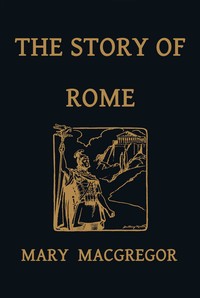
The Story of Rome, From the Earliest Times to the Death of Augustus, Told to Boys and Girls — Key Ideas to Explore
(0 User reviews)
579
Project Gutenberg
2021
Not confirmed
Rome -- History -- Juvenile literature
Readers of public-domain and historical texts
Project Gutenberg digital edition
en
Edition facts
Words
121,479
Reading time
529 min
Text sections
132
Before opening The Story of Rome, From the Earliest Times to the Death of Augustus, Told to Boys and Girls — Key Ideas to Explore, the edition data offers a quick orientation: 121,479 words, 8 hr 49 min estimated reading time, and 132 detected text sections.
The text analysis averages about 19.6 words per sentence, while the detected sections provide another way to judge how the source is divided.
Project Gutenberg metadata also associates the work with “Rome -- History -- Juvenile literature,” connecting these edition facts with the source record’s subject description.
Source:
Project Gutenberg record #66147
Mary MacGregor's 1912 history for children uses vivid, sensory prose and direct address to young readers, weaving dramatic battle scenes with moral commentary on Roman ambition and cruelty, as seen in the Scipio-Masinissa night attack.
Read the complete public-domain text at its original source.
Read on Project GutenbergMary MacGregor opens her 1912 history with a dedicatory letter that frames the narrative as a 'miracle wrought out of the tears and throes of a brave and ambitious people.' The authorial voice is immediately present: she addresses two boys directly, contrasting the quiet garden where she wrote with the 'fierce battle-cries' and 'clash of arms' that fill the pages. This personal, almost conversational tone persists throughout, as MacGregor frequently steps in to explain motives or pass judgment—calling the Romans 'pitiless' and 'often cruel' while also praising their 'dauntless courage.' The prose is sensory and concrete, built around specific details: the crackling of wooden huts, the cold darkness of a midnight march, officers still holding wine cups as they flee a fire.
Direct Address and Moral Framing
MacGregor consistently breaks the fourth wall to speak to her young audience. In the dedication, she tells Ian and Willie that 'little of its peace has stolen into the tale,' preparing them for violence. Later, she editorializes: 'the Romans were often pitiless, showing little mercy to those they conquered.' This moral commentary is woven into action sequences. When describing the night attack on the Carthaginian camp, she notes that Masinissa 'stealthily set fire to the huts' and that many perished 'in the flames' or were 'trampled to death.' She does not shy from brutality, but frames it as part of Rome's relentless ambition. The authorial 'you' recurs—'you will hear the tramp of armies'—creating a shared experience between narrator and reader.
Sensory and Tactile Description
MacGregor builds scenes through physical details that appeal to multiple senses. The camp attack is described with 'cold and dark' night, 'crackling wood,' and the 'smoke and noise' that rouse feasting officers. She specifies that the tents were 'built of wood, and covered with branches of trees or with rushes,' making the fire's rapid spread plausible. The Romans march 'seven miles' before striking; the bugle sounds 'at the hour usual for the evening meal' to avoid suspicion. These concrete specifics ground the narrative in a tactile world. Even the aftermath is vivid: Hasdrubal hides in a 'mausoleum or tomb,' takes poison, and his body is dragged into the street, his head 'placed in triumph on the top of a pole.' The prose relies on such stark images rather than abstract summary.
Structure and Pacing of Battle Narratives
MacGregor structures military episodes with clear cause-and-effect chains. The Scipio-Masinissa attack follows a logical sequence: reconnaissance (the false truce), planning (Masinissa's knowledge of camp construction), execution (early supper, midnight march, fire), and consequences (confusion, death, escape of leaders). She uses short, declarative sentences to build momentum: 'One night Scipio resolved to do as Masinissa had suggested. He ordered his men to have supper early.' The narrative then slows to describe the fire's spread and the Carthaginians' disbelief—'none of them seemed to think that an enemy had done this thing.' This alternation between rapid action and explanatory pause gives the history a novelistic rhythm. Each battle is a self-contained story with a clear turning point.
Characterization Through Action
MacGregor reveals character primarily through deeds rather than description. Masinissa is shown as cunning and decisive: he 'knew that the camp was guarded carelessly' and 'advised Scipio to plan a night attack.' Hasdrubal is defined by his resilience—after defeat, he 'rode into the neighbouring districts, and was already enrolling volunteers'—and his grim end: hiding in a family tomb, taking poison. Syphax is captured, then his kingdom is divided. Even minor figures are sketched through behavior: officers 'still carrying in their hands the cups out of which they had been drinking' as they flee. The author rarely tells readers what to think of these men; instead, their actions—and the consequences—speak for themselves. This technique keeps the narrative moving while building a cast of memorable historical actors.
Readers should attend to the way MacGregor balances factual reporting with moral judgment. Her authorial voice is never neutral: she praises courage while condemning cruelty, and she expects her young audience to share her reactions. The book's episodic structure—each chapter a self-contained story—makes it suitable for reading aloud or dipping into. The illustrations by Paul Woodroffe, W. Rainey, and Dudley Heath add another layer of interpretation, often emphasizing dramatic moments. For those interested in how early twentieth-century educators shaped historical narratives for children, this text offers a rich case study in didactic yet vivid storytelling.
Sometimes, after closing Mary MacGregor's Story of Rome, with its eager, sunlit battles, I find myself drifting toward Gibbon’s slower twilight. Her Scipio, bold and sure, feels so young next to the weary empires of his later pages. That same ambition turned shadow, those same trumpets grown distant—it’s like hearing an old friend’s voice soften into silence. One morning, that quiet ache led me to History of the Decline and Fall of the Roman Empire — Volume 2 — Story, Setting & Ideas, and the whole story felt finally, gently complete.
There are no reviews for this eBook.
There are no comments for this eBook.
Reader reflection
Before you leave, reflect on the book
Use these questions to collect your thoughts before moving on.
Your progress
0
/
10
2
Was reading this book enjoyable?
3
Would you pass this book on to a friend?
4
How much effort did this book require?
5
Did the book give you something worth debating?
6
How original did the book feel?
7
How much did the book move you?
8
Was the book what you thought it would be?
9
In one sentence, what did you learn?
10