1

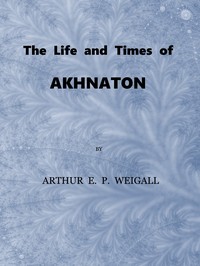
The Life and Times of Akhnaton, Pharaoh of Egypt — Background and Themes
(0 User reviews)
1144
Project Gutenberg
2020
Not confirmed
Egypt -- History -- To 332 B.C.; Egypt -- Religion; Akhenaton, King of Egypt; Pharaohs -- Biography; Egypt -- History -- Eighteenth dynasty, ca. 1570-1320 B.C.
Readers of public-domain and historical texts
Project Gutenberg digital edition
en
Edition facts
Words
62,225
Reading time
271 min
Text sections
14
Before opening The Life and Times of Akhnaton, Pharaoh of Egypt — Background and Themes, the edition data offers a quick orientation: 62,225 words, 4 hr 31 min estimated reading time, and 14 detected text sections.
The text analysis averages about 24.7 words per sentence, while the detected sections provide another way to judge how the source is divided.
Project Gutenberg metadata also associates the work with “Egypt -- History -- To 332 B.C.,” connecting these edition facts with the source record’s subject description.
Source:
Project Gutenberg record #62434
Weigall's 1911 biography of Akhnaton examines the pharaoh's religious revolution through the lens of early 20th-century Egyptology, comparing his Hymn to the Aton with Psalm 104 and detailing the administration of the new Aton cult.
Read the complete public-domain text at its original source.
Read on Project GutenbergArthur Weigall, writing as Chief Inspector of Antiquities for Upper Egypt in 1911, presents Akhnaton not merely as a historical figure but as a theological innovator whose Hymn to the Aton bears what he calls a “remarkable similarity” to Psalm 104. The book juxtaposes the full text of the psalm with the pharaoh’s composition, then weighs whether Akhnaton originated the poem or both drew from a common Syrian source. Weigall leans toward Akhnaton’s originality, noting the king was “probably neither much more nor less than twenty or twenty-one years of age” when he wrote it.
A Hymn and a Psalm Side by Side
Weigall devotes a substantial passage to setting the Hymn to the Aton alongside Psalm 104, line by line. He observes that the pharaoh’s lines “The world is in Thy hand, even as Thou hast made them” echo the psalmist’s “O Lord, how manifold are Thy works! In wisdom hast Thou made them all.” The comparison is not casual: Weigall argues that “one can hardly doubt that there is a direct connection between the two compositions.” He then poses a specific historical question—whether both texts derived from a common Syrian source or whether the Hebrew psalm is “derived from this Pharaoh’s original poem.” The discussion is grounded in textual evidence rather than assertion, and Weigall acknowledges that “both views are admissible.” His own conclusion, however, is that “in consideration of Akhnaton’s peculiar ability and originality there seems considerable likelihood that he is the author in the first instance of this gem of the Psalter.”
The King as Self-Taught Theologian
Weigall repeatedly emphasizes that Akhnaton believed himself to be “the only man to whom God had revealed Himself.” He notes that the pharaoh “never admits that he was in any way taught to regard God as he did, but always speaks of himself, and is spoken of, as the originator and teacher of the faith.” This claim is supported by the book’s description of Akhnaton’s method: he “expounded to his followers the doctrines which he wished them to embrace,” sitting “for many an hour in the halls of his palace, or under the trees in the gardens beside the Nile, earnestly telling of the beauties of the Aton to officials and nobles.” The biography thus presents the religion of the Aton as a top-down creation, not a gradual development. Weigall’s portrait of a young, sickly king—“His ill-health did not permit him to tax his brain with impunity”—adds a personal dimension to the intellectual portrait, though the excerpts do not reveal the nature of that illness.
Administration of a New Cult
Once the religion “had now assumed shape and symmetry,” Weigall recounts, Akhnaton appointed a high priest to manage the cult in the new capital, “the City of the Horizon of Aton.” The chosen official was Meryra, a noble who “seems to have early associated himself with the movement.” Weigall admits that “unfortunately we know very little of the career of Meryra,” but he draws on the tomb inscriptions in the hills behind the capital for what evidence exists. The appointment allowed Akhnaton to “turn his attention to other affairs, and more especially to the conversion of the rest of Egypt.” The book here shifts from theology to statecraft, showing how the pharaoh’s religious revolution required administrative machinery. Weigall’s tone remains measured: he does not invent details about Meryra’s life, but uses the tomb walls as a primary source, consistent with his background as an inspector of antiquities.
Readers should note that Weigall’s biography is itself a historical document, reflecting early 20th-century Egyptological methods and assumptions. The book’s strength lies in its close reading of the Hymn to the Aton and its willingness to pose comparative questions about biblical and Egyptian literature. The excerpts do not cover Akhnaton’s military or diplomatic actions, nor the eventual collapse of his religious reforms; the biography’s full scope must be inferred from the catalog subjects and the text’s own structure.
Weigall’s Akhnaton makes you wonder how a ruler’s private sun could feel so lonely once the court turns away. I found that same quiet ache in Tiberius’s later years, watching him withdraw from Rome’s heavy gaze. It is strange, how power strands a person. The Lives of the Twelve Caesars, Volume 03: Tiberius — Story, Setting & Ideas reminded me of that old feeling.
There are no reviews for this eBook.
There are no comments for this eBook.
Reader reflection
Record your reading impressions
A brief reflection can help important ideas stay with you longer.
Your progress
0
/
10
2
Was reading this book enjoyable?
3
Is this a title you would suggest to others?
4
What was the reading difficulty like?
5
What did you think about the pace?
6
Would this book work well in a reading group?
7
How much did the book move you?
8
How did the reading compare with what you expected?
9
What is the main idea you are taking away?
10