1

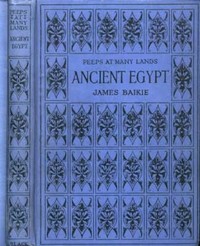
Ancient Egypt — Reading Companion
(0 User reviews)
923
Project Gutenberg
2005
Not confirmed
Egypt -- History, Ancient
Readers of public-domain and historical texts
Project Gutenberg digital edition
en
Edition facts
Words
101,870
Reading time
443 min
Text sections
14
Before opening Ancient Egypt — Reading Companion, the edition data offers a quick orientation: 101,870 words, 7 hr 23 min estimated reading time, and 14 detected text sections.
The text analysis averages about 27.6 words per sentence, while the detected sections provide another way to judge how the source is divided.
Project Gutenberg metadata also associates the work with “Egypt -- History, Ancient,” connecting these edition facts with the source record’s subject description.
Source:
Project Gutenberg record #15663
This editorial note examines how Rawlinson and Gilman blend geological observation, classical allusion, and traveler testimony to explain the 'vocal Memnon' colossus, revealing their method of weaving diverse evidence into a single historical argument.
Read the complete public-domain text at its original source.
Read on Project GutenbergRawlinson and Gilman devote several pages to the Colossi of Memnon, but their treatment of the so-called 'vocal Memnon' is particularly revealing of their authorial method. Rather than simply reporting the legend, they assemble a chain of evidence that moves from ancient testimony (Pausanias, Juvenal) through modern scientific explanation (Humboldt on temperature-induced sounds) to a literary parallel from Kinglake's Eothen. The passage is a microcosm of the book's broader approach: a willingness to yoke disparate sources—classical poetry, natural philosophy, travel narrative—into a single explanatory framework.
The Structure of an Argument
The authors do not present the vocal Memnon as a mere curiosity. They first cite the Latin line 'Dimidio magicæ resonabant Memnone chordæ' (half of Memnon resounded with magic strings), then describe the earthquake that toppled the upper part of the colossus and the later restoration that silenced it. Only after establishing the historical sequence do they introduce the scientific principle: 'musical sounds are often given forth both by natural rocks and by quarried masses of stone, in consequence of a sudden change of temperature.' The structure is cumulative, not digressive. Each piece of evidence—Humboldt's Oronooko observations, the sandstone rocks of El Nakous, the French expedition at Karnak—reinforces the same point, building toward the conclusion that the sound was a natural phenomenon unknown to the original sculptor.
Diction and the Texture of Authority
Rawlinson and Gilman's prose is marked by a deliberate layering of registers. Technical terms like 'torso,' 'superinduced,' and 'metaphysical explanation' sit alongside the vivid sensory detail of Kinglake's 'innocent bells of Marlen.' The effect is to create a voice that is at once scholarly and accessible. The authors also employ a distinctive rhetorical move: they quote a long passage from Eothen describing a mirage-like bell-ringing, then gently question the writer's 'metaphysical explanation' and propose instead that he 'heard actual musical sounds, emitted by the rocks.' This is not mere pedantry; it is a demonstration of how empirical reasoning can reinterpret even the most poetic testimony.
The Use of Classical and Modern Sources
The note's reliance on Pausanias (2nd century AD) and Juvenal (1st-2nd century AD) anchors the phenomenon in antiquity, but the authors are equally comfortable citing Baron Humboldt (early 19th century) and the French Expedition of 1798-1801. This temporal跨度 is characteristic of the book as a whole: the past is not sealed off but remains accessible to modern inquiry. The authors also show a preference for eyewitness accounts, whether ancient or contemporary. They quote the French savants Jomard, Jollois, and Devilliers directly, noting that they 'heard a sound, resembling that of a chord breaking, issue from the blocks at sunrise'—a phrase that echoes Pausanias's own comparison. The echo is not accidental; it is a subtle argument for continuity of experience across millennia.
What the Excerpts Do Not Tell Us
The surviving excerpts cover only a portion of the book's fourteen sections. The discussion of the vocal Memnon appears to belong to a later chapter, but the surrounding context—whether the authors treat other colossi, other acoustic phenomena, or other examples of 'restoration'—is absent. It would be unwise to assume that this passage is representative of the whole work's style or argument. The catalog indicates that the book covers the 'Land of Egypt,' 'The People of Egypt,' 'The Dawn of History,' and 'The Pyramid Builders,' among other topics. The Memnon passage may be an outlier in its reliance on natural science; other sections may rely more heavily on hieroglyphic evidence or biblical comparison. Readers should approach each chapter on its own terms.
Readers interested in the authors' method will find the Memnon passage a useful touchstone. It exemplifies a willingness to test ancient stories against modern observation, to weave together poetry and geology, and to let the evidence—however fragmentary—shape the narrative. The book as a whole likely rewards similar attention to how Rawlinson and Gilman move from source to source, building their case for a civilization that is both remote and, in its material remains, surprisingly audible.
There is something moving about how Rawlinson and Gilman coax the vocal Memnon into speech, weaving traveler tales with geological care. It reminded me, oddly, of the slower patience found in History of Egypt, Chaldæa, Syria, Babylonia, and Assyria, Volume 7 (of 12) — Context and Discussion, where whole dynasties feel like echoes across stone. Both leave me with the same quiet ache—history as a whisper we barely catch.
There are no reviews for this eBook.
There are no comments for this eBook.
Reader reflection
How did this book work for you?
Your answers remain private and are stored only in this browser.
Your progress
0
/
10
2
Did this book hold your interest?
3
Is this a title you would suggest to others?
4
Did the language feel accessible?
5
Did the book give you something worth debating?
6
Was the book easy to understand?
7
How did the pace of the book feel?
8
Did the book meet your expectations?
9
Which lesson or insight stayed with you?
10