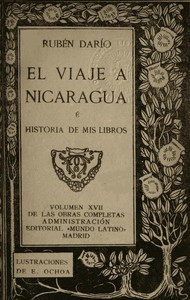
El Viaje a Nicaragua é Historia de mis libros by Rubén Darío

(1 User reviews)   1821
Darío, Rubén, 1867-1916 Darío, Rubén, 1867-1916
Spanish
Ever wonder what happens when one of the world's most celebrated poets returns to the country he loves but barely knows? That's the heart of Rubén Darío's 'El Viaje a Nicaragua é Historia de mis libros.' This isn't just a travelogue; it's a deep, personal journey. Darío, the father of Latin American modernism, goes back to Nicaragua after decades in Europe. He finds a homeland that's both familiar and strange, a place that shaped him but feels distant. The book weaves his physical travels with the story of how his famous works came to be. It's about the clash between the sophisticated international artist and the raw, beautiful country of his birth. If you've ever felt torn between where you're from and who you've become, this book will speak to you.
Share

Read "El Viaje a Nicaragua é Historia de mis libros by Rubén Darío" Online

This book is available in the public domain. Start reading the digital edition below.

START READING FULL BOOK
Instant Access    Mobile Friendly

Book Preview

A short preview of the book’s content is shown below to give you an idea of its style and themes.

Los errores obvios de puntuación y de imprenta han sido corregidos. Las páginas en blanco han sido eliminadas. El texto en cursiva se indica con _guión bajo_. El texto en letra versalita (versalilla) ha sido sustituido por mayúsculas. Los superíndices se indican con el símbolo ^circunflejo. Las ilustraciones y sus textos introductorios que aparecen en el original dentro de los capítulos se han trasladado entre éstos. * * * * * EL VIAJE A NICARAGUA [Ilustración] [Ilustración: ...EN CIUDADES DONDE SONRÍEN MUJERES DE AMOR Y GRACIA...] [Ilustración: RUBÉN DARÍO EL VIAJE A NICARAGUA É HISTORIA DE MIS LIBROS VOLUMEN XVII DE LAS OBRAS COMPLETAS ADMINISTRACIÓN EDITORIAL «MUNDO LATINO» MADRID ILUSTRACIONES DE E. OCHOA] [Ilustración] ES PROPIEDAD EL VIAJE A NICARAGUA [Ilustración] [Ilustración] _A la Sra. D.^a Blanca de Belaya_ _respetuoso homenaje._ I Tras quince años de ausencia, deseaba yo volver a ver mi tierra natal. Había en mí algo como una nostalgia del Trópico. Del paisaje, de las gentes, de las cosas conocidas en los años de la infancia y de la primera juventud. La catedral, la casa vieja de tejas arábigas en donde despertó mi razón y aprendí a leer; la tía abuela casi centenaria que aun vive; los amigos de la niñez que ha respetado la muerte, y tal cual linda y delicada novia, hoy frondosa y prolífica mamá por la obra fecundante del tiempo. Quince años de ausencia... Buenos Aires, Madrid, París, y tantas idas y venidas continentales. Pensé un buen día: iré a Nicaragua. Sentí en la memoria el sol tórrido y vi los altos volcanes, los lagos de agua azul en los antiguos cráteres, así vastas tazas demetéricas como llenas de cielo líquido. Y salí de París hacia el país centroamericano, ardiente y pintoresco, habitado por gente brava y cordial, entre bosques lujuriantes y tupidos, en ciudades donde sonríen mujeres de amor y gracia, y donde la bandera del país es azul y blanca, como la de la República Argentina. Me embarqué en un vapor francés, _La Provence_, en el puerto de Cherbourg, y llegué a Nueva York sin más incidente en la ruta que una enorme ola de que habló mucho la prensa. Según Luis Bonafoux, la caricia del mar iba para mí... Muchas gracias. Pasé por la metrópoli yanqui cuando estaba en pleno hervor una crisis financiera. Sentí el huracán de la Bolsa. Vi la omnipotencia del multimillonario y admiré la locura mammónica de la vasta capital del cheque. Siempre que he pasado por esa tierra he tenido la misma impresión. La precipitación de la vida altera los nervios. Las construcciones comerciales producen el mismo efecto psíquico que las arquitecturas abrumadoras percibidas por Quincey en sus estados tebaicos. El ambiente delirio de las grandezas hace daño a la ponderación del espíritu. Siéntese algo allí de primitivo y de supertérreo, de cainitas o de marcianos. Los ascensores _express_ no son para mi temperamento, ni las vastas oleadas de muchedumbres electorales tocando pitos, ni el manethecelphárico renglón que al despertarme en la sombra de la noche solía aparecer bajo el teléfono en mi cuarto del Astor: _You have mail in the office_. Pésima navegación se hace de Nueva York a Colón. Los vapores son pequeños y mal acondicionados. La comida, desolante: desde la sopas dudosas hasta las suelas de engrudo envueltas en miel de ciertos _cakes_ de la culinaria anglosajona. Ya es el Trópico. Ya la casas de Colón se destacan entre las palmeras. Ya se desembarca del muelle colonés, entre jamaicanos, yanquis y panameños medio yanquis. Y sentís que estáis en una prolongación de los Estados Unidos. Desde vuestro banco del salón de espera...

This is a limited preview. Download the book to read the full content.

Rubén Darío is a legend, the poet who changed Spanish-language literature forever. But this book shows us the man behind the legend. It’s split into two parts that beautifully connect.

The Story

The first part, 'El Viaje a Nicaragua,' is Darío's account of returning to his homeland in 1907. After living in Chile, Argentina, and Europe for most of his adult life, he comes back as a famous writer. He describes the landscapes, the people, and the intense emotions of reconnecting with a place that lives in his memory. The second part, 'Historia de mis libros,' is like a backstage pass to his genius. He walks us through the creation of his major works—books like Azul... and Prosas Profanas—explaining his inspirations, his struggles, and the literary revolutions he started, almost by accident.

Why You Should Read It

This is where Darío feels most human. You see his pride in Nicaragua's beauty clash with his frustration at its political troubles. You feel his nostalgia for a childhood home that’s now seen through the eyes of a worldly traveler. Reading about how his books were born is thrilling. It demystifies the creative process. He wasn't just struck by magic; he worked, he experimented, and he dared to break all the old rules. It’s incredibly motivating for anyone who creates anything.

Final Verdict

This book is perfect for poetry lovers who want to meet the poet, for travelers who understand that every journey is also an internal one, and for anyone curious about the soul of Latin America at the turn of the 20th century. It’s not a fast-paced adventure; it’s a thoughtful, rich, and deeply personal reflection on identity, art, and home. You'll come away feeling like you've had a long, fascinating conversation with a literary giant.


ℹ️ Public Domain Notice

This publication is available for unrestricted use. You are welcome to share this with anyone.
Emma Jones
1 year ago

Finally a version with clear text and no errors.

5
5 out of 5 (1 User reviews )

Add a Review

Your Rating *
There are no comments for this eBook.
You must log in to post a comment.
Log in


Related eBooks