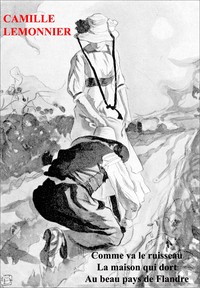
Comme va le ruisseau by Camille Lemonnier

(0 User reviews)   3169
Lemonnier, Camille, 1844-1913 Lemonnier, Camille, 1844-1913
French
If you've ever wondered about the quiet, complicated lives happening just out of sight in a small village, this book is for you. Camille Lemonnier's 'Comme va le ruisseau' (How Goes the Stream) isn't about kings or wars. It's about the deep, slow-moving currents of everyday life. We follow a young man who returns to his rural home, only to find the place and the people he knew are changing in ways he can't stop. The real mystery isn't a crime—it's trying to hold onto a way of life that's slipping away, just like water through your fingers. It's a beautiful, bittersweet look at memory, home, and the price of progress.
Share

Read "Comme va le ruisseau by Camille Lemonnier" Online

This book is available in the public domain. Start reading the digital edition below.

START READING FULL BOOK
Instant Access    Mobile Friendly

Book Preview

A short preview of the book’s content is shown below to give you an idea of its style and themes.

originale. Les erreurs manifestes de typographie ont été corrigées. La ponctuation a pu faire l'objet de quelques corrections mineures. Veuillez noter que les pages de publicité n'ont pas été reproduites. COMME VA LE RUISSEAU [Illustration] Copyright 1911, by Pierre LAFITTE & Cie [Illustration: TANTIN RETU, SA VIEILLE CLOCHE DE PAILLE EN TRAVERS DE LA NUQUE (P. 7).] CAMILLE LEMONNIER COMME VA LE RUISSEAU ILLUSTRATIONS DE GEO DUPUIS [Illustration] IDÉAL-BIBLIOTHÈQUE _PIERRE LAFITTE & Cie_ 90, AVENUE DES CHAMPS-ÉLYSÉES, 90 PARIS COMME VA LE RUISSEAU I Au moment où M. Fauche prenait le train, il vit descendre d'une voiture de troisième classe une jeune fille qui, après avoir jeté deux cartons à chapeau sur le quai, lestement sautait du marchepied. --Tiens! qui c'est-il? Il connaissait toutes les jeunesses du village; il n'avait pas encore vu celle-là. Il cala dans le filet son sac de voyage, poussa sous la banquette un petit panier d'osier qui sentait le poisson frais. Et encore une fois, penché à la portière que le garde refermait, il regardait, sautillant du côté du fourgon aux bagages avec des mouvements légers d'oiselle, la jolie silhouette. Un coffre en bois fut jeté brusquement à terre: elle eut un geste d'effroi comme si le coffre allait se rompre. Et puis la locomotive souffla comme un gros chat, le train doucement se mettait à glisser. Jean Fauche n'aperçut plus que le flottement d'un bout de robe rose qui tournait la barrière. Il rentra la tête, car les arbres du verger lui masquaient la vue de la gare. [Illustration: THIÉRACHE LE TAILLEUR LEVAIT ALORS LA TÊTE (P. 6).] Il était certain à présent que c'était une petite personne comme il en venait quelquefois à l'hôtellerie de la _Truite d'or_. Il alluma un cigare et ne pensa plus qu'à la chose pour laquelle, tous les quinze jours, il prenait le train et se rendait à la ville. Jean Fauche généralement choisissait le samedi. Il quittait sa maison un quart d'heure avant le passage du train, enfilait la venelle près de l'église, marchant devant lui de son large pas tranquille. Ces jours-là, il endossait son veston neuf, linge frais, chapeau mou à plume de faisan sur l'oreille. C'était un grand garçon de vingt-huit ans, carré d'épaules, le jarret sûr, les hanches souples. Il passait pour être un peu secret, très occupé de chasse, de pêche et de jardinage, l'œil en dessous quand il trouvait quelqu'un sur sa route. Un jour il avait débarqué; la maison était vieille, en moellons du pays, face au fleuve, sur la marine. Elle lui avait plu; il l'avait louée; et le jardinet s'était accru d'une serre à raisins; un grand sarment de rosier avait grimpé le long du pignon. On arrivait des petites rues le soir aspirer l'odeur de ses roses et de ses pois de senteur, selon la saison. M. Jean Fauche vivait là d'une vie solitaire, poétique et silencieuse. Il s'était ménagé un atelier sous le toit. Il lui arrivait de peindre quelquefois, quand la pêche et le reste lui en laissaient le temps. Fallait-il qu'il fût riche pour se permettre toutes ces dépenses! Le vieux Tantin Rétu, qui était son homme à tout faire, disait en clignant de l'œil qu'il était monté une fois là-haut et qu'il y avait vu en peinture une grande diablesse de femme déshabillée. Cependant M. Fauche peignait de préférence le paysage. Il y avait à peu près quatre ans qu'il habitait le pays et tout de suite, deux fois le mois, il avait pris l'habitude de partir pour la ville. Thiérache, le tailleur, qui jouait de l'harmonium après sa journée, levait alors la...

This is a limited preview. Download the book to read the full content.

Camille Lemonnier was a Belgian writer who loved painting pictures with words, and this book is one of his quieter, more thoughtful portraits of rural life.

The Story

The story follows a young man who comes back to the village where he grew up. He expects to find everything just as he left it, but he's wrong. The old rhythms of farming life are being challenged. New ideas are creeping in, and the community he remembers is starting to fray at the edges. The 'stream' in the title isn't just a body of water; it's a symbol of time, tradition, and the flow of life itself. The book shows his struggle as he watches the world he loves change, and his own place in it become uncertain.

Why You Should Read It

This book moves slowly, like a lazy afternoon by a riverbank, but that's its strength. Lemonnier makes you feel the weight of the soil, the smell of the fields after rain, and the heavy silence of things left unsaid between neighbors. It's not packed with action. Instead, it's filled with feeling—the ache of nostalgia, the fear of the new, and the quiet courage of people trying to make sense of their lives. The characters feel real, not because they do dramatic things, but because of their very human hesitations and hopes.

Final Verdict

Perfect for readers who love character-driven stories and rich, atmospheric writing. If you enjoy authors who capture the soul of a place and its people, like Thomas Hardy or some of George Sand's pastoral works, you'll find a friend in Lemonnier. It's a book for a quiet evening, one that leaves you thinking about your own roots and what 'home' really means long after you've turned the last page.


⚖️ Copyright Free

This work has been identified as being free of known copyright restrictions. It is available for public use and education.


There are no reviews for this eBook.

0
0 out of 5 (0 User reviews )

Add a Review

Your Rating *
There are no comments for this eBook.
You must log in to post a comment.
Log in


Related eBooks