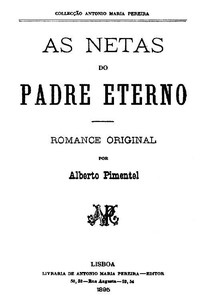
As Netas do Padre Eterno by Alberto Pimentel

(4 User reviews)   4582
Pimentel, Alberto, 1849-1925 Pimentel, Alberto, 1849-1925
Portuguese
Okay, I just finished this wild old Portuguese book that's part historical novel, part political satire, and I have to tell you about it. Picture this: it's the late 1800s, and a group of powerful, ambitious women—the 'Netas' or granddaughters of the 'Eternal Priest'—are secretly pulling the strings of society. They're in a quiet but fierce power struggle with the established male order of the time. The book follows their schemes, alliances, and the constant tension between their public faces and private ambitions. It's a fascinating, almost gossipy look at gender, power, and influence from over a century ago, wrapped in a story that feels surprisingly modern in its concerns. If you like historical fiction with sharp social commentary, this hidden gem is worth tracking down.
Share

Read "As Netas do Padre Eterno by Alberto Pimentel" Online

This book is available in the public domain. Start reading the digital edition below.

START READING FULL BOOK
Instant Access    Mobile Friendly

Book Preview

A short preview of the book’s content is shown below to give you an idea of its style and themes.

as desgraças da Hespanha punham no coração dos seus angustiados filhos. Uma pagina d’esse livro diz: «Com mão debil e porventura timida empunhou o tribuno Emilio Castellar as redeas da dictadura, ao tempo que a fronteira portugueza, onde eu me achava, offerecia um lancinante espectaculo. Cerrada a do norte pelos carlistas, era aquella a unica porta para escapar d’este inferno de Hespanha, e cada trem do caminho de ferro iberico parecia barcada de Acheronte, como aquellas que rangendo os dentes e blasphemando até dos paes de seus paes viu passar o grande poeta da Edade-Média pelo lodoso lago que ao inferno conduz... De Madrid, de Alcoy, de Cartagena, de Valencia, de Cadiz, de Sevilha, de Jerez chegavam por centenas familias dispersas, como quem foge de uma peste; e isto um dia e outro dia, e mezes inteiros; e récuas e caravanas de inoffensivos lavradores, de pacificos artistas, de laboriosos industriaes desembocavam simultaneamente por todas as povoções da fronteira, desde Barrancos a Setubal, desde Elvas a Lisboa, desde Zamora e Ciudad-Rodrigo ao Porto: misero formigueiro de emigrantes de todas as classes e condições, com os olhos voltados para Hespanha, mas receiando, a cada hora que o horror os convertesse em estatuas, como á mulher da Biblia.» Setubal, pela amenidade do seu clima, e pela belleza dos seus campos, hospedou uma importante colonia hespanhola, atravez da qual eu passeei algumas vezes os meus ocios de _touriste_. Principalmente no verão, em julho, que foi a epocha mais calamitosa da revolução, a affluencia de emigrados era numerosissima ali. E o que é verdadeiramente notavel é que os havia de todas as côres politicas, porque o perigo era egual para todos. A revolução não curava de perscrutar as opiniões de cada um. Perseguia, roubava, incendiava, fuzilava indistinctamente. Já não era pequena felicidade poder fugir á morte, salvar a vida. Dos emigrados, conheci alguns ricos, poucos, e esses eram os que tinham logrado liquidar a tempo os seus haveres, antes que a _santa federal_ se encarregasse da liquidação. D’este numero era a familia Saavedra, de Sevilha, que tem de figurar n’esta historia. Tres pessoas apenas: pae, mãe e filha. O pae, o sr. D. Enrique Saavedra, havia collocado uma somma importante n’um Banco inglez. Era um industrial acreditado, e teve o bom senso de fechar as suas fabricas mal que soaram os primeiros rugidos da insurreição cantonal. Se não tivesse procedido assim, haveria decerto succumbido ás mãos dos seus proprios operarios. Em politica, era francamente monarchico; principalmente, partidario dos Bourbons. «Qué broma! dizia-me elle, D. Izabel está exilada. Mas ou a revolução aniquila de vez a Hespanha, ou a Hespanha ainda chamará a rainha». Com effeito, em pouco se enganou D. Enrique: um filho de Isabel II occupou o throno de S. Fernando. Os Bourbons voltaram. Quem se não importava grandemente com os acontecimentos politicos de Hespanha, era sua filha, Soledad, a mais _salerosa_ individualidade de mulher que é dado phantasiar na vaga idealisação de uma noite de serenata. Bocage, quando do alto do seu monumento a viu, estremeceu. Setubal ficou encantada, não obstante ter-se iberisado então pelas relações commerciaes que mantinha com a colonia dos emigrados. E digo commerciaes, porque os hespanhoes eram os primeiros a queixar-se que só tratassem com elles os setubalenses nas transacções ordinarias da vida: dá cá, toma lá. De resto os emigrados entretinham-se uns com os outros, com duas ou tres pessoas da terra, e com as que eram de fóra. O ideal de Soledad era uma _tertulia_ ou, como hoje dizemos á franceza, uma _soirée_. Por muito tempo procurou desesperadamente uma _tertulia_, e se alguma vez ouvia tocar piano,...

This is a limited preview. Download the book to read the full content.

Published in 1894, As Netas do Padre Eterno (The Granddaughters of the Eternal Priest) is a curious and engaging novel from Portugal's literary past. Alberto Pimentel uses fiction to hold a mirror up to the society of his day.

The Story

The plot centers on a secretive, influential society of women who are the intellectual and spiritual descendants (the 'granddaughters') of a mythical figure of wisdom. They operate in the drawing rooms and salons of Lisbon, wielding significant social and political power behind the scenes. The story unfolds through their intricate maneuvers, conversations, and conflicts as they navigate a world dominated by official male authority. It's less about dramatic battles and more about the subtle war of wits, reputation, and persuasion.

Why You Should Read It

What grabbed me was how fresh some of the ideas feel. Pimentel isn't just writing a period piece; he's actively exploring the role of women in public life and the hidden architectures of power. The characters are clever and complex, not mere symbols. You get the sense of a vibrant, talkative, and strategic underworld operating right under the nose of conventional society. It’s a smart, sometimes funny, and always thoughtful peek into the concerns of another era that still resonate.

Final Verdict

This book is perfect for readers who enjoy historical fiction that's heavy on ideas and social observation rather than swordfights or romance. It's a great pick if you're curious about 19th-century Portuguese culture, feminist thought in literature, or just love a good story about clever people outsmarting the system. Be prepared for a more conversational, salon-style pace rather than a breakneck thriller. A truly interesting find for the patient and curious reader.


📢 No Rights Reserved

There are no legal restrictions on this material. Preserving history for future generations.

James Lee
1 year ago

Not bad at all.

John Lopez
3 months ago

Great read!

Steven Ramirez
1 year ago

Loved it.

Karen Gonzalez
1 year ago

I started reading out of curiosity and the atmosphere created is totally immersive. A valuable addition to my collection.


4.5
4.5 out of 5 (4 User reviews )

Add a Review

Your Rating *
There are no comments for this eBook.
You must log in to post a comment.
Log in


Related eBooks